
A virtual address gives your business a legitimate commercial presence, professional credibility, and complete privacy, without the cost or commitment of a physical office.
Rising office rents, long-term lease commitments, and increasing operational costs are making traditional office space harder to justify, especially for modern businesses that operate remotely or primarily online.
At the same time, entrepreneurs and small companies still need a credible business presence to build trust with customers, partners, and regulators. Using a home address for business can raise privacy concerns, since it often becomes publicly visible in registrations, directories, and partner materials.
A virtual address provides a practical solution by giving businesses a real commercial mailing address without the cost of maintaining a physical office. This approach allows companies to maintain a professional image while avoiding the overhead of traditional office space.
Key takeaways
- A virtual address is a real commercial mailing address that businesses can use for correspondence, registrations, and professional communications.
- It helps businesses build credibility while protecting personal privacy and avoiding the high costs associated with physical office space.
- Virtual address services typically include mail handling, forwarding, scanning, and secure storage.
- This solution is ideal for startups, remote businesses, freelancers, and companies expanding into new markets.
- For many organizations, a virtual address provides a flexible, cost-effective way to establish a professional business presence.
What is a virtual address for businesses?
A virtual business address is a real commercial mailing address that companies can use for business correspondence, registrations, and public listings without physically occupying the location.
Unlike a PO Box, which is limited to postal services, a virtual address provides a legitimate street address that can be used with the IRS, state,, and on official documents. It also differs from a full virtual office, which may include meeting rooms or coworking access, and from a registered agent service that is used specifically for legal notices.
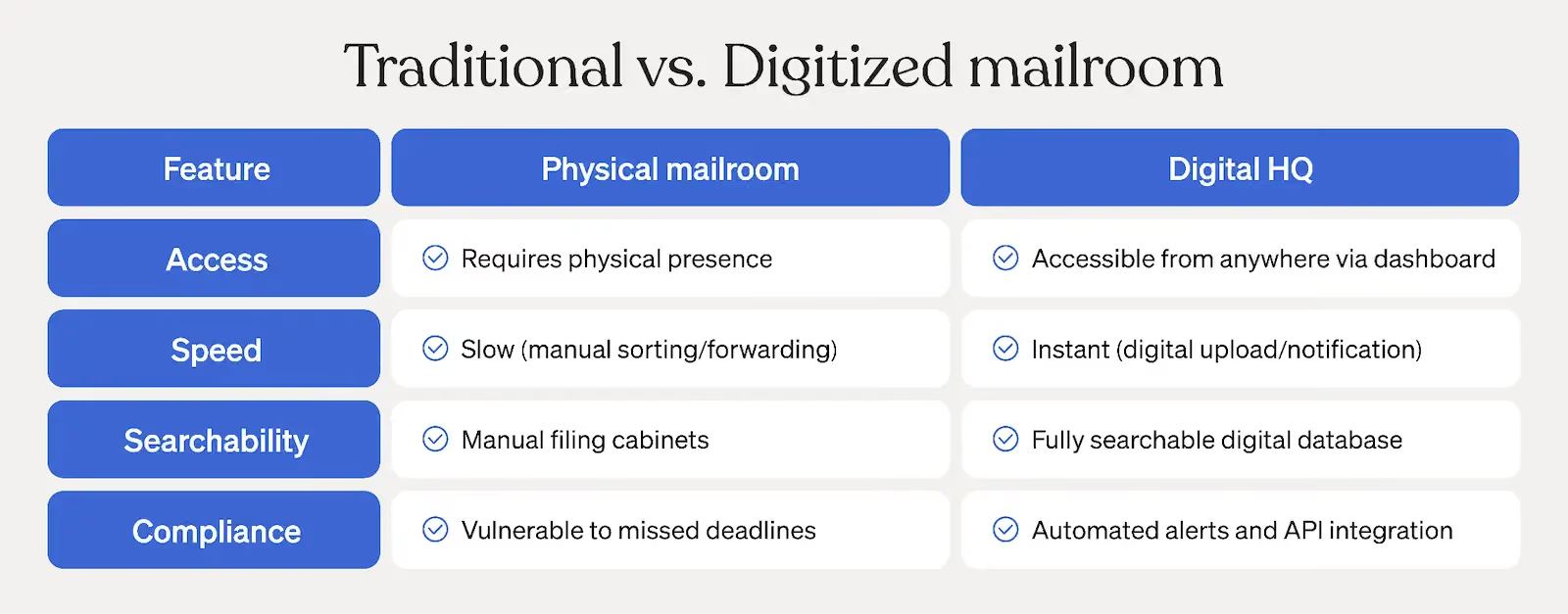
Instead, a virtual address focuses on professional mail management and business presence. Services typically include mail receiving, scanning, forwarding, secure handling, and digital notifications when mail arrives.
Why are businesses choosing virtual addresses?
Businesses are increasingly turning to virtual addresses as a way to balance professionalism, cost control, and operational flexibility. It’s important to explore Stable’s locations and case studies to see how other organizations are using virtual addresses to support modern, distributed operations.
Build a professional image
A commercial business address can significantly improve how a company is perceived by investors, partners, and vendors. Listing a recognizable commercial location signals legitimacy and stability.
This is especially important for startups and small businesses trying to establish credibility in competitive markets. A professional address helps reinforce trust and confidence in your brand.
Reduce overhead costs
Maintaining a traditional office requires paying for rent, utilities, maintenance, and often long-term lease commitments. A virtual address replaces these expenses with a predictable monthly service fee.
This allows businesses to maintain a professional mailing address without taking on the financial burden of a physical workspace. The result is greater cost control and fewer fixed overhead expenses.
Protect your privacy
Using a home address for business purposes can expose personal information to the public. Business registrations, government filings, and online directories often make addresses visible to anyone searching for the company.
A virtual address helps keep personal locations private while still allowing businesses to maintain a legitimate presence. This adds a layer of both personal safety and professional separation between home and work.
Stay flexible as you grow
Startups and remote teams often need the freedom to expand or shift operations without relocating offices. A virtual address provides that flexibility by giving businesses a stable professional presence even as their team structure changes.
Companies can operate from anywhere while maintaining a consistent business address. This scalability supports distributed teams, digital-first businesses, and evolving growth strategies.
In many ways, it reflects the future of virtual business presence and digital residency, where location becomes more about credibility than physical workspace.
Who should use a virtual business address?
Virtual addresses are especially valuable for small teams that want to operate professionally without the expense of a physical office. Virtual addresses for small businesses provide an affordable way to establish credibility, maintain privacy, and stay flexible as operations grow.
Instead of committing to office leases or exposing a home address publicly, businesses can use a professional commercial address while continuing to work remotely or across multiple locations.
Many types of small businesses benefit from this setup.
- Remote entrepreneurs can maintain a credible business presence even if they work from home or travel frequently.
- LLC owners, particularly new or single-member LLCs, often use a virtual address to separate their personal and business addresses on registrations and public records.
- Ecommerce sellers can receive business correspondence and returns without sharing their home location.
- Consultants and service providers gain a more professional presence on websites, proposals, and marketing materials.
For growing small businesses, a virtual address provides the flexibility to scale operations without the cost or complexity of relocating offices.
How does a virtual address work?
Understanding how to receive and manage mail with a virtual address is straightforward. Most services follow a simple process that allows businesses to establish an address, activate mail handling, and manage incoming correspondence digitally.
Step 1: Choose a location
The first step is selecting a city and address that aligns with your business goals. Some companies choose locations in major business hubs to strengthen brand credibility, while others select locations closer to their target markets.
In certain cases, location may also influence regulatory or tax considerations depending on the business structure. A recognizable commercial address can also enhance brand perception when displayed on a website or marketing materials.
The right location helps reinforce professionalism while positioning the business within a specific market or region.
Step 2: Complete setup
After selecting a location, businesses complete a short onboarding process to activate their service. This typically includes identity verification and signing documentation that authorizes the provider to receive mail on the company’s behalf.
Many providers also guide customers through compliance requirements to ensure the address can be used appropriately for business purposes. Once approved, the address becomes active and ready to receive mail. At this point, businesses gain access to a virtual mailbox, which allows them to view and manage incoming mail digitally.
Step 3: Receive and manage mail
When mail arrives at the virtual address, it is securely received and logged by the provider.
Businesses can then manage their mail through an online dashboard, choosing whether items should be scanned, forwarded to another location, or shredded. These options provide flexibility for companies operating remotely or across multiple locations.
Many platforms also include automations that notify users when new mail arrives, immediately scan or forward, or automatically route certain items to specific teams. The result is a reliable, secure system for handling business correspondence without requiring a physical office.
Virtual address vs PO Box: What’s the difference?
The difference between a virtual address vs PO box for small business use comes down to functionality and professional credibility. A PO Box is a mailbox located inside a post office and can only receive mail from USPS. In contrast, a virtual address provides a real commercial street address that businesses can list on websites, registrations, and marketing materials.
Virtual address services also typically include additional features such as mail scanning, forwarding, and digital mail management. However, requirements for how an address can be used vary by state and business type. Some jurisdictions may require a separate registered agent for legal notices or impose other compliance rules.
Businesses should always review local regulations or consult with a professional advisor to ensure they are meeting applicable requirements.
Is a virtual address legal for business registration?
In many cases, businesses can use a virtual address when registering their company, but legality depends on the jurisdiction and the type of business entity. Some states require companies to list a separate registered agent address for legal service of process, even if a virtual address is used for general business correspondence.
Because these requirements vary, it is important to review local regulations before listing a virtual address on official filings. Many providers help guide customers through these rules during setup. Stable also offers registered agent services, allowing businesses to manage both compliance requirements and mail handling through a single provider, and access all mail digitally in a single view.
How to choose the right virtual address service
When evaluating providers, it helps to think of the process as a checklist. The right service should support both operational convenience and long-term business credibility.
- Real commercial street address: Ensure the address is a legitimate commercial location rather than just a mailbox rental service.
- Secure mail handling process: Look for providers that log incoming mail, store it securely, and provide reliable handling procedures. SOC 2 and HIPAA compliance may also be essential depending on your industry.
- Transparent pricing: Clear monthly pricing helps businesses avoid hidden fees or unexpected service charges.
- No restrictive long-term contracts: Flexible plans allow businesses to adjust their setup as they grow.
- Customer support access: Responsive support ensures help is available when questions about mail or compliance arise.
- Clear compliance guidance: Providers should help customers understand how their address can be used for registrations, filings, and other official purposes.
FAQs
Can I use a virtual address for my LLC?
In many cases, yes. Many LLC owners use a virtual address for business correspondence and public listings, though some states still require a separate registered agent address for legal mail.
Can I open a bank account with a virtual address?
Many banks allow businesses to open accounts using a virtual address, but policies vary by institution. Some may request additional documentation verifying the business. Check with your bank first.
Is a virtual address the same as a registered agent?
No. A virtual address is used for general business mail and correspondence, while a registered agent is designated to receive legal notices and service of process.
Can I use a virtual address for my Google Business Profile?
Google’s guidelines vary depending on the business type. Some service-area businesses can use a virtual address while hiding the physical location from public view.
What happens to my mail?
Mail sent to your virtual address is received by the provider and scanned into your digital mailbox. You can then choose to have the contents scanned, forwarded, or securely shredded.
Establish your business presence without office costs
A virtual address allows businesses to maintain a professional presence without the cost and complexity of a physical office. By combining credibility, privacy protection, predictable costs, and operational flexibility, it provides a modern solution for companies that operate remotely or across multiple locations.
For many small businesses, a virtual address is more than a mailing solution; it is a practical piece of infrastructure that supports growth while keeping overhead low. It helps companies appear established and trustworthy while maintaining the agility needed in today’s digital business environment.
If you're ready to strengthen your business presence without committing to office space, contact our sales team to learn how Stable can help you get started.