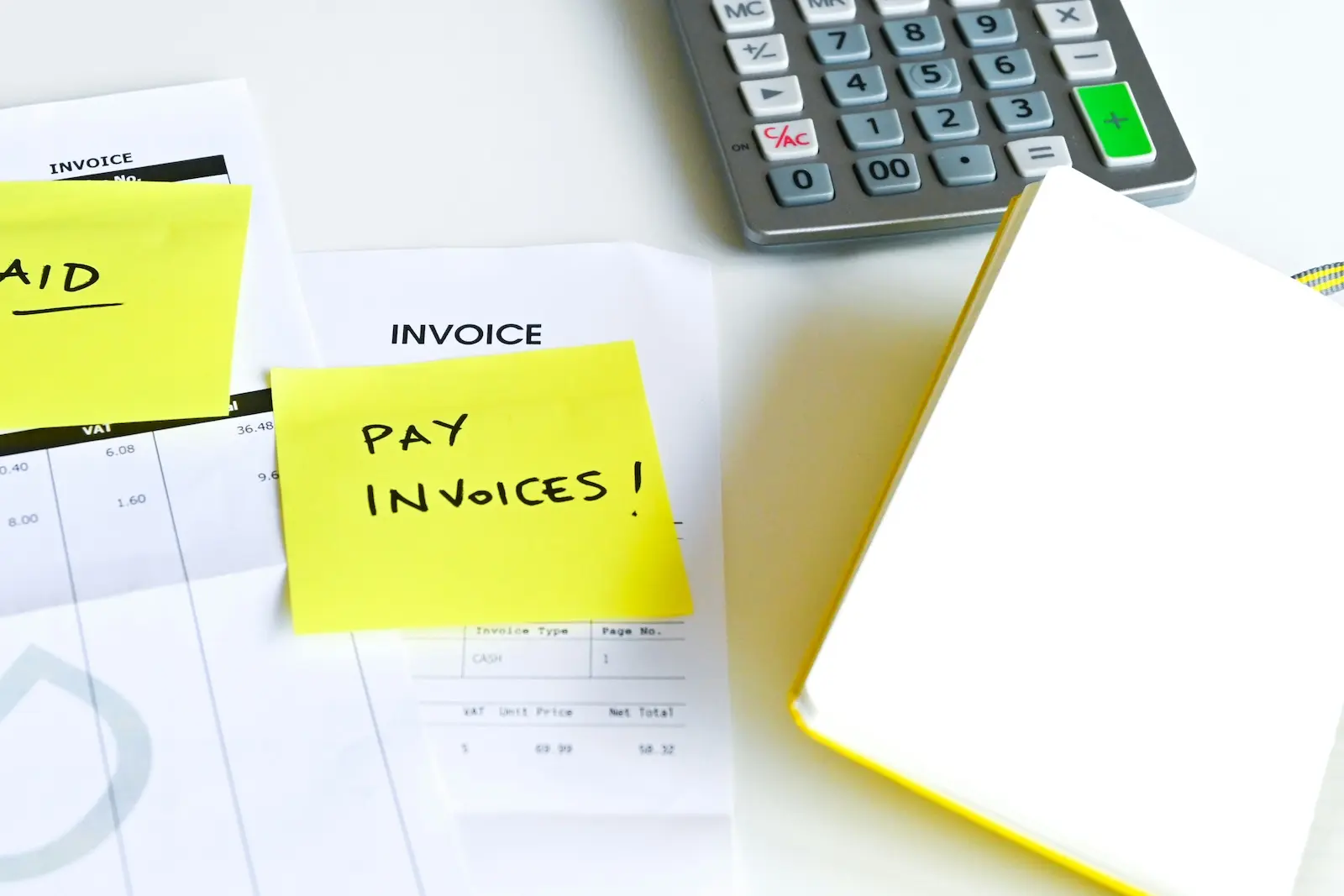
A mail approval workflow is a structured process that controls how financial mail, like checks, invoices, and regulatory notices, moves from intake to action without delays or dropped handoffs.
Finance teams handle a category of mail that can't be ignored. Checks need to be deposited. Invoices need to be approved before payment runs. IRS notices have hard deadlines. While misplaced mail can be an inconvenience, it can also lead to late fees, damaged vendor relationships, or compliance gaps that seriously impact business continuity.
Yet for many finance teams, mail is still treated as an afterthought. Someone picks it up from the office or waits for a remote employee to forward it. It lands in a pile, gets scanned on someone's phone, and gets emailed around with a vague "can you handle this?" The process remains behind the scenes… until something breaks.
Mail approval workflows bring structure to this function. They define how mail enters the organization, who sees it, what happens next, and how decisions get documented. For finance teams managing accounts payable, check deposits, and regulatory correspondence, that structure is a core operational requirement.
Key takeaways
- A mail approval workflow defines how financial mail is received, routed, reviewed, and acted on, replacing the ad hoc with something repeatable and auditable.
- Traditional mail handling creates single points of failure: one person opens and routes everything, and when that person is unavailable, approvals stall.
- Modern workflows digitize mail at intake, route it automatically by document type, and allow multiple stakeholders to approve or act without touching a physical document.
- Finance teams that automate mail approval gain faster payment cycles, fewer missed deadlines, and a complete audit trail for compliance.
- Remote and multi-entity teams benefit most, because centralized digital intake eliminates the geography problem entirely.
What is a mail approval workflow?
A mail approval workflow is the set of steps that govern what happens to financial mail from the moment it arrives to the moment it's resolved. The workflow defines intake, routing, review, approval, and action.
Consider three concrete examples. When a check arrives, someone needs to verify it before it goes to the bank, confirming the amount, the payor, and that it matches an expected payment. That's a check approval workflow. When a vendor invoice arrives, the accounts payable team needs to confirm it against a purchase order, get sign-off from the right budget owner, and release payment. That's an invoice approval process. When an IRS notice arrives, it needs to reach legal or a CPA the same day; not sit in a pile until someone notices it.
Most finance teams perform these functions already, but what they often lack is a consistent, visible process for doing so. When the workflow exists only in someone's head, or in an informal chain of emails and scans, it breaks the moment that person takes a vacation, changes roles, or simply misses something in a busy week.
Common challenges with traditional mail approval workflows

Single point of failure. One person opens and sorts everything. If they're out, nothing moves, and if they miss something, no one else knows.
No centralized intake. For remote or hybrid teams, mail goes to a home address, a former office, or a P.O. box that no one checks consistently.
Multi-entity complexity. Mail for three entities lands in three different places and someone has to consolidate it manually every day, with no real system underneath it.
Approval delays cascade. A check that sits unreviewed for three days affects cash flow. An invoice that doesn't reach the right approver in time results in a late payment, a penalty, or a damaged vendor relationship.
No visibility across the team. When approvals happen via email or phone, there's no shared view of what's been received, what's pending, and what's been acted on. For teams already struggling with how to prevent delayed or lost mail, an invisible approval process adds risk.
Security and compliance exposure. Physical mail containing financial documents – checks, tax notices, account statements – represents real compliance risk when handled inconsistently, with no log of who touched what and when.
What a modern mail approval workflow looks like
A well-designed finance mail processing workflow replaces manual steps with a structured, automated sequence. Here's how it works end to end:
- Receive. All incoming mail, physical and digital, arrives at a single, centralized address maintained by a mail management provider.
- Digitize. The provider scans physical documents the same day they arrive and stores high-resolution images securely.
- Upload to a centralized dashboard. Every piece of mail appears in one place, visible to whoever needs to see it, with proper access controls.
- Route automatically. Configurable rules match documents to the right person based on document type, sender, entity, or keyword, e.g. an invoice from a specific vendor goes directly to the AP manager; an IRS notice routes to legal.
- Notify stakeholders. The right people receive an alert the moment a document is routed to them.
- Approve digitally. Stakeholders review and / or take action without handling a physical document. Everything is logged with a timestamp and user attribution.
- Trigger action. Approved documents move to the next step: electronic check deposit, payment release, forwarding, archiving, or secure shredding.
Beyond the core workflow, AI-powered automations reduce manual work further. Document classification, data extraction from invoices, and integrations with accounting software and ERP systems mean that routine actions happen without human intervention. Finance teams spend their time on exceptions and decisions, not on processing.
Key benefits for finance teams
The case comes down to what changes when the process runs properly.
Faster approvals improve cash flow
When checks and invoices move through a defined process with automatic routing and integrations with the tools businesses already use, approvals that once took days happen in hours, and the audit trail is built in automatically. For teams weighing the tradeoffs, manual vs. automated check deposit workflows illustrate where the time and cost differences compound most.
Reduced manual work frees up capacity
The hours spent opening, scanning, emailing, and following up on mail go back to higher-value work. For lean finance teams, that's meaningful. For growing teams, it means headcount scales more slowly.
Fewer errors and missed deadlines
Configurable routing rules eliminate misrouting. Automated notifications eliminate the "I never got that" problem, and a complete audit trail means nothing disappears.
Better visibility across teams and entities
A shared dashboard gives controllers, CFOs, and operations leaders a clear view of what’s pending and what’s done. Multi-entity operations run from a single, consolidated view.
Stronger compliance and security posture
SOC 2 Type II certification and HIPAA-compliant handling mean sensitive financial documents are managed to an auditable standard, a baseline requirement for financial services firms, law firms, and property managers.
Scalability without proportional headcount growth
As transaction volume grows, a well-automated mail approval workflow absorbs the increase without requiring additional staff.
Where automation makes the biggest impact
Accounts payable workflows. High invoice volume makes accounts payable mail automation one of the highest-ROI applications of this kind of workflow: recurring routing and approval work means recurring opportunities for error. With automation, invoices land with the right approver the moment they arrive, payment cycles shorten, and the risk of duplicate or missed payments drops significantly. Finance teams that rely on manual accounts payable report losing 11 hours per week to tasks that automated routing eliminates.
Check deposit approvals. An electronic check deposit workflow means the check gets reviewed, approved, and deposited, no one has to touch it. For a remote controller who's been waiting on a check sitting in an empty office, the gap is obvious, and so is the cost.
Multi-entity operations. Property managers, holding companies, and businesses with multiple legal entities face a structural intake problem. A digital mailroom for finance teams creates one intake point and routes by entity automatically, so the right AP contact never sees mail intended for a different entity. Darwin Homes cut mail processing time by 90% after centralizing intake — see how they did it.
Remote team collaboration. For distributed finance teams without a central office, mail handling is both a process inconvenience and an operational risk. A virtual address and digital mailroom solve intake structurally; routing rules and digital approvals handle everything downstream.
High-volume environments. Law firms, financial services companies, and property management operations receive large volumes of financial and legal mail daily. Automated intake, classification, and routing make that volume manageable without proportional headcount growth, and the audit trail satisfies the documentation requirements these industries carry.
How to implement a mail approval workflow
- Audit your current process. Map how mail enters the organization today, who opens it, who routes it, and where it stalls.
- Identify the highest-impact failure points. Is the problem at intake? At routing? At integrating it with your other systems?
- Define routing rules by document type and stakeholder. Decide which document types exist, who should receive each, and what action follows approval.
- Centralize mail intake through a digital mailroom provider. A virtual business address and same-day scanning service creates a single intake point and eliminates the geography problem.
- Enable digital approvals. Remove physical handling from the approval loop entirely. Stakeholders review via a shared dashboard or email / Slack notification.
- Integrate with existing systems. Connect the mail workflow to your accounting software or ERP. Stable integrations automate the handoff from receipt to action, closing the loop without additional manual steps.

How Stable supports mail approval workflows
Every Stable customer gets a real street address that serves as their centralized mail intake point. All physical mail goes there, gets scanned the same day it arrives at the in-house processing facility, and appears immediately in a secure, searchable dashboard. Team members see only what they're authorized to see. This is handled through our virtual address.
From the dashboard, configurable routing rules and tagging handle distribution automatically. Finance teams define the rules: by document type, sender, or entity, and documents reach the right people automatically. Multiple stakeholders can view and action in the same platform, and every action is logged within the same virtual mailbox.
Our electronic check deposit workflow takes this further for teams handling checks. We digitize checks on arrival, route them to the appropriate approver, and deposit them electronically once approved, without anyone physically handling the document. You can also immediately automate the check deposit process without manual intervention if preferred.
We are SOC 2 Type II certified and provide HIPAA-compliant handling where applicable. We handle every document to an auditable standard. AI-powered automations and integrations with accounting software reduce manual touchpoints further, so finance teams interact with exceptions and decisions, not with processing.
Turn mail from a point of failure into a system you can rely on
Moving from manual mail handling to an automated approval workflow makes the process proactive instead of reactive. Finance teams that build structure around this function gain speed, visibility, and control, and the impact of those advantages can be felt quickly. To see how we can support your team's mail approval workflow, reach out to start a conversation.