
Operational efficiency suffers when teams are repeatedly pulled away from higher-value work, creating bottlenecks that are easy to miss but difficult to scale.
Operational inefficiency is often framed as a problem of time or cost. In practice, it is often a problem of attention.
Small, recurring interruptions can redirect focus away from the work that drives execution, growth, and long-term performance. Oftentimes these interruptions don’t feel urgent. But over time, they shape how work gets done across the organization.
To better understand this dynamic, we surveyed more than 250 US-based professionals responsible for managing business mail. The findings point to a broader issue: repetitive, low-value workflows — especially those tied to manual mail handling, document routing, and physical mail management — not only consume valuable time, they interrupt higher-value work across teams.
For leadership, this creates a clear challenge. Improving operational efficiency is not only about doing work faster. It is about ensuring that the right work gets done consistently.
Key takeaways
- Operational efficiency bottlenecks are often caused by repeated interruptions
- 88% of respondents said mail-related work — including sorting, routing, and processing physical mail — interrupts higher-value responsibilities
- The most affected areas include process improvement, customer service, growth, and financial work
- Interruption-driven inefficiency increases as organizations scale
- Opportunity cost is a key indicator of operational drag
- Reducing inefficient workflows (particularly manual, location-dependent workflows like mail processing) helps protect focus and improve execution
How operational efficiency bottlenecks form from everyday work
When there are bottlenecks in operational efficiency, they don’t immediately turn into major failures. They start as small, repeatable tasks:
- A document that needs to be tracked down
- A request that requires manual follow-up
- A workflow that depends on physical handling or informal coordination, such as receiving, sorting, or forwarding business mail across teams or locations.
Each of these tasks can take mere minutes, but when they occur frequently, they start to create operational drag. Instead of enabling progress, workflows begin to interrupt it. Work becomes more reactive and follow-through becomes slower. Teams spend more time maintaining processes instead of improving them.
In our research, this pattern was consistent across organizations of all sizes. The work was getting done, but teams were also being pulled away from more important priorities to handle routine operational tasks, like mail management.
Why work interruption reduces business process efficiency
Work interruption is one of the most overlooked drivers of inefficient workflows. It not only affects how people work, but also how they think.
When a team member shifts attention from a strategic task to a reactive one, there is a cost beyond the time spent. Focus is lost, context needs to be rebuilt, and momentum slows.
When this happens repeatedly, important work is delayed, while lower-value work continues to demand attention.
Our research highlights how widespread this issue is:
88% of respondents said mail-related work interrupts their more important responsibilities.
For mid-size and enterprise businesses, that number rises to 96%. These interruptions are often driven by workflows that rely on manual mail management, physical document handling, and fragmented routing processes.
This level of interruption has clear implications for business process efficiency:
- Strategic work takes longer to complete
- Process improvements are delayed
- Teams operate in reactive cycles instead of proactive ones
- Coordination becomes more complex across functions
That means that work is done slower, and less effectively.
What higher-value work is being displaced
To understand the full impact of operational bottlenecks, it is important to look at what work is being pushed aside. According to the research, mail-related workflows (including receiving, scanning, routing, and tracking business mail) take time away from the following functions.
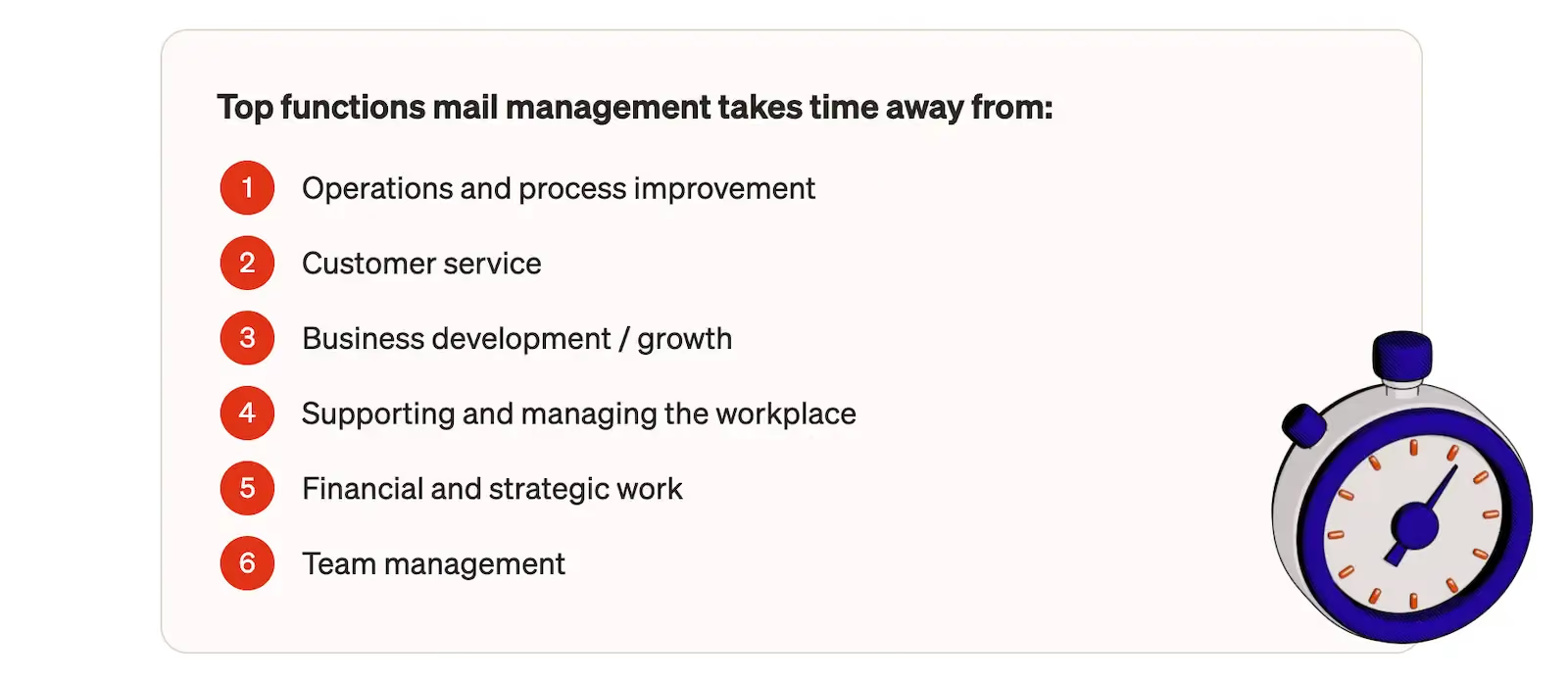
These responsibilities are core drivers of operational efficiency, and their effects are cumulative:
- Process inefficiencies remain unresolved
- Customer response times slow down
- Growth initiatives lose momentum
- Financial workflows become less timely
- Leadership capacity is reduced
This is where opportunity cost becomes glaringly obvious. The impact is not limited to the work being done, but instead includes the work that is delayed or never completed.
Why operational bottlenecks increase as companies scale
As organizations grow, operational complexity increases.
There are more stakeholders, more systems, and more handoffs. When a workflow is already fragmented, the problem is amplified as you grow.
In our research, 71% of respondents said mail-based workflows are disruptive to overall operations. Among mid-size and enterprise businesses, that figure rises to 85%.
This reflects a broader pattern. Inefficient workflows that feel manageable in smaller environments become more disruptive as volume increases. Tasks that once required minimal coordination begin to span multiple teams, offices, or systems… especially when mail is tied to a single physical location rather than a centralized or digital system.
This is how operational bottlenecks become embedded within the organization. Instead of supporting scale, workflows begin to constrain it.
Opportunity cost is the clearest signal of operational drag
Operational efficiency is often measured in output, but a more accurate measure would be allocation. Are teams spending time where it creates the most value? Opportunity cost can help answer that question.
When skilled employees spend time on repetitive work, the business loses capacity for higher-impact activities. That includes:
- Improving internal processes
- Supporting customers
- Accelerating financial operations
- Advancing strategic initiatives
- Managing and developing teams
These trade-offs are not always visible in reporting, but they shape how effectively the organization operates.
In the long-term, they determine whether a business can improve its systems and sustain growth.
How to identify inefficient workflows that create bottlenecks
For leadership teams, improving operational efficiency starts with identifying where interruption is occurring. Look for workflows that are:
- Repetitive and rules-based
- Manually routed across teams
- Dependent on physical processes
- Difficult to track or audit
- Frequently revisited or reworked
- Considered “routine” but consistently disruptive
These are the tell tale signs of workflows that create more operational drag than expected. They’re also good candidates for automation, particularly through solutions like digital mailrooms, virtual mailboxes, and automated mail routing systems. Addressing them doesn’t just reduce daily workload, it also improves how work moves across the organization.
Operational efficiency improves when focus is protected
Operational efficiency can increase speed and reduce costs. But it also ensures that your teams focus on the works that drive consistent results.
Our research shows that interruption-driven workflows — especially those tied to manual mail management and physical document handling — can significantly reduce that focus. When left unaddressed, they create bottlenecks that slow execution and limit growth.
But the opportunity is clear: when businesses reduce inefficient workflows and protect higher-value work, they create more capacity across operations, finance, customer experience, and leadership.
Read the full research report to explore how business mail impacts operational efficiency, where the biggest bottlenecks occur, and how modern organizations are reducing operational drag.
Frequently asked questions
What are operational efficiency bottlenecks?
Operational efficiency bottlenecks are recurring points of friction that slow execution or redirect teams away from higher-value work. They are often caused by inefficient workflows or repeated interruptions.
How do interruptions impact operational efficiency?
Interruptions reduce focus, delay important work, and increase coordination overhead. Over time, they create operational drag and reduce overall efficiency.
What is “opportunity cost” in business operations?
Opportunity cost is the value a business loses when time is spent on lower-value work instead of higher-impact activities like process improvement, customer service, or growth.
What are examples of inefficient workflows?
Examples include manual routing of physical mail, repetitive administrative tasks, fragmented systems, and processes that require multiple handoffs or physical coordination.
Why do operational bottlenecks increase with scale?
As companies grow, workflows involve more people, systems, and locations. Inefficiencies that were once manageable become more disruptive and harder to control.
How can businesses improve operational efficiency?
Businesses can improve efficiency by identifying repetitive, manual workflows and redesigning them to reduce interruption, improve visibility, and support more consistent execution.