
Manual rent check deposits are a hidden cash flow killer, and property managers who automate the process gain faster liquidity, less administrative burden, and a more predictable financial operation at any portfolio size.
Cash flow consistency remains one of the most important (and sometimes challenging) parts of property management. Even when rent is paid on time, manual check handling and bank deposit processes can slow the movement of funds into operating accounts.
At the same time, property managers are under increasing pressure to operate leaner while still maintaining reliable income across growing portfolios. Electronic check deposit offers a practical way to modernize rent collection without requiring tenants to change how they pay.
By automating the deposit process, property managers can improve liquidity, reduce operational friction, and create a more efficient financial workflow.
Key takeaways
- Electronic check deposit allows property managers to deposit rent checks digitally without visiting the bank.
- Automating the deposit process helps accelerate cash flow by reducing delays in check handling and bank processing.
- Property managers benefit from faster processing, improved accuracy, reduced manual work, and lower operational risk.
- As property portfolios grow, automation becomes essential for maintaining efficiency and financial visibility across multiple properties.
- Electronic check deposit provides a scalable, technology-driven solution for modernizing rent payment workflows.
What is electronic check deposit?
Electronic check deposit is a digital process that allows property managers to deposit rent checks remotely by scanning or capturing the check information and transmitting it directly to the bank.
Instead of physically transporting checks for deposit, the payment information is processed electronically through a secure system. This replaces traditional workflows that require staff to batch checks, endorse them, and travel to a bank branch or dropbox.
Importantly, tenants can continue paying rent by check just as they always have. The difference happens behind the scenes, where the deposit process becomes faster, more efficient, and easier to manage.
How are manual rent deposits slowing down your cash flow?
Manual rent processing often introduces small delays that grow over time. What seems like a routine weekly task can quickly become a bottleneck that slows down cash availability.
Operational friction
During rent week, manual systems create a series of time-consuming tasks for property management teams. Checks may arrive at different times through mail, drop boxes, or in-person collection. Staff must log each payment, confirm tenant details, and manually endorse checks before preparing them for deposit.
These steps often occur under pressure to meet daily bank cutoff times. When multiple properties are involved, the process becomes even more complicated and labor-intensive.
Timing gaps
Cash flow delays frequently occur before checks even reach the bank. Mail transit can add several days to the payment timeline, especially for tenants who send rent close to the due date.
Once checks arrive, batch processing delays may push deposits to the next business day. Bank processing timelines can add additional lag before funds become available. Weekends and holidays extend these gaps even further, stretching the time between payment receipt and usable cash.
Financial impact
These operational delays eventually translate into financial friction for property managers. Funds may arrive inconsistently, making it harder to maintain predictable liquidity.
Property managers can struggle to align outgoing expenses — such as maintenance, payroll, or vendor payments — with incoming rent payments. This lack of predictability adds stress during peak rent cycles and increases administrative pressure on finance teams.
Over time, inefficient deposit processes can limit how smoothly a portfolio operates.
Why are property managers automating rent check deposits?
As operational complexity grows, property managers are looking for ways to simplify financial workflows without disrupting tenant payment habits. The benefits of automating rent collection and check deposits often begin with improving the reliability and efficiency of the deposit process.
Streamlining rent intake
Automation removes many of the manual steps involved in processing rent checks. Instead of relying on staff to handle physical deposits, digital systems capture and transmit check data automatically.
This reduces the number of touchpoints required to move payments into the bank. Standardized workflows also help ensure that checks are processed consistently across properties. As a result, rent intake becomes more predictable and easier to manage.
Reducing staff strain
Manual deposit processes can place a significant workload on property management teams, especially during peak rent periods.
Automation reduces the need for repetitive check handling and data entry, freeing staff to focus on higher-value operational tasks. It also simplifies reconciliation by creating clearer payment records.
Many organizations are turning to remote deposit capture solutions for small businesses to streamline these processes. This allows teams to manage rent payments efficiently even with limited staff resources.
Increasing process reliability
Automated deposit systems help create consistent deposit timing from week to week. Digital records provide clear audit trails for every check processed, making it easier to track payments and verify transactions.
Centralized dashboards can also provide visibility across multiple properties, reducing the need for manual tracking. With fewer process gaps, property managers gain greater confidence in the reliability of their rent collection workflows.
The financial case for electronic rent deposits
From a financial perspective, deposit speed directly affects liquidity, forecasting accuracy, and operational stability. Electronic check deposits help property managers shorten the time between receiving rent and having usable funds available, creating a more predictable and efficient financial flow.
Liquidity acceleration
Electronic deposits significantly shorten the gap between when a rent payment is received and when funds become available. Faster deposit processing improves access to operating capital, giving property managers greater flexibility when covering expenses or responding to unexpected costs.
This shift is less about operational convenience and more about improving financial timing and control. When deposits occur consistently and quickly, managers can rely on incoming funds with greater confidence.
Understanding how long it takes for a mobile check deposit to clear also becomes less of a concern when the deposit process itself is streamlined and predictable.
Reduced dependency on short-term buffers
When rent deposits take longer to process, property managers often rely on temporary financial buffers to bridge the gap. These may include maintaining higher cash reserves or occasionally using short-term credit to cover expenses while deposits clear.
Automating deposits reduces the need to rely on these stopgap measures. Funds arrive more consistently, allowing teams to plan expenses with greater confidence. Over time, this helps smooth out cash flow cycles and reduce financial pressure during peak rent periods.
Portfolio-level financial performance
At a portfolio level, faster deposits contribute to more accurate financial forecasting and reporting. Predictable rent intake allows property managers to better align income timing with operating costs and owner distributions. This stability can also strengthen relationships with vendors by ensuring payments occur on a reliable schedule.
Improved timing also supports clearer performance metrics, including more accurate net operating income calculations. These benefits become especially important when considering cash flow management for commercial vs residential properties, where payment timing and operational complexity may vary.
How do different rent deposit methods compare?
Property managers today have several options for processing rent checks. Understanding how these models differ can help organizations choose a deposit workflow that aligns with their operational and financial priorities.
Manual deposit model
The traditional manual deposit model requires significant staff involvement. Teams must collect, log, endorse, and physically deposit checks at a bank branch or dropbox. This process introduces variable timing depending on staff availability, banking hours, and processing delays.
It also increases exposure to human error during data entry or reconciliation. Over time, these inefficiencies can contribute to delayed check deposits and slower cash availability.
Bank lockbox model
A bank lockbox model outsources check intake and processing to a financial institution. While this reduces some internal workload, it often comes with ongoing service fees and less direct control over the process.
Visibility into payment status may also be limited compared to in-house digital systems. Additionally, lockbox services may not integrate easily with property management or accounting platforms. This can create gaps between payment processing and internal financial reporting.
Electronic check deposit model
Electronic check deposit systems allow property managers to process checks digitally while maintaining full visibility into deposit activity. Payments can be captured, deposited, and tracked through a centralized platform, simplifying reconciliation and reporting.
The infrastructure also scales more easily as portfolios grow, without requiring additional staff or manual processes. Over time, the model often provides a lower long-term cost profile compared to outsourced services. It also helps clarify the difference between eCheck and mobile check deposit, since tenants may still pay by check while the deposit process itself becomes digital.
Is it time to modernize your rent deposit process?
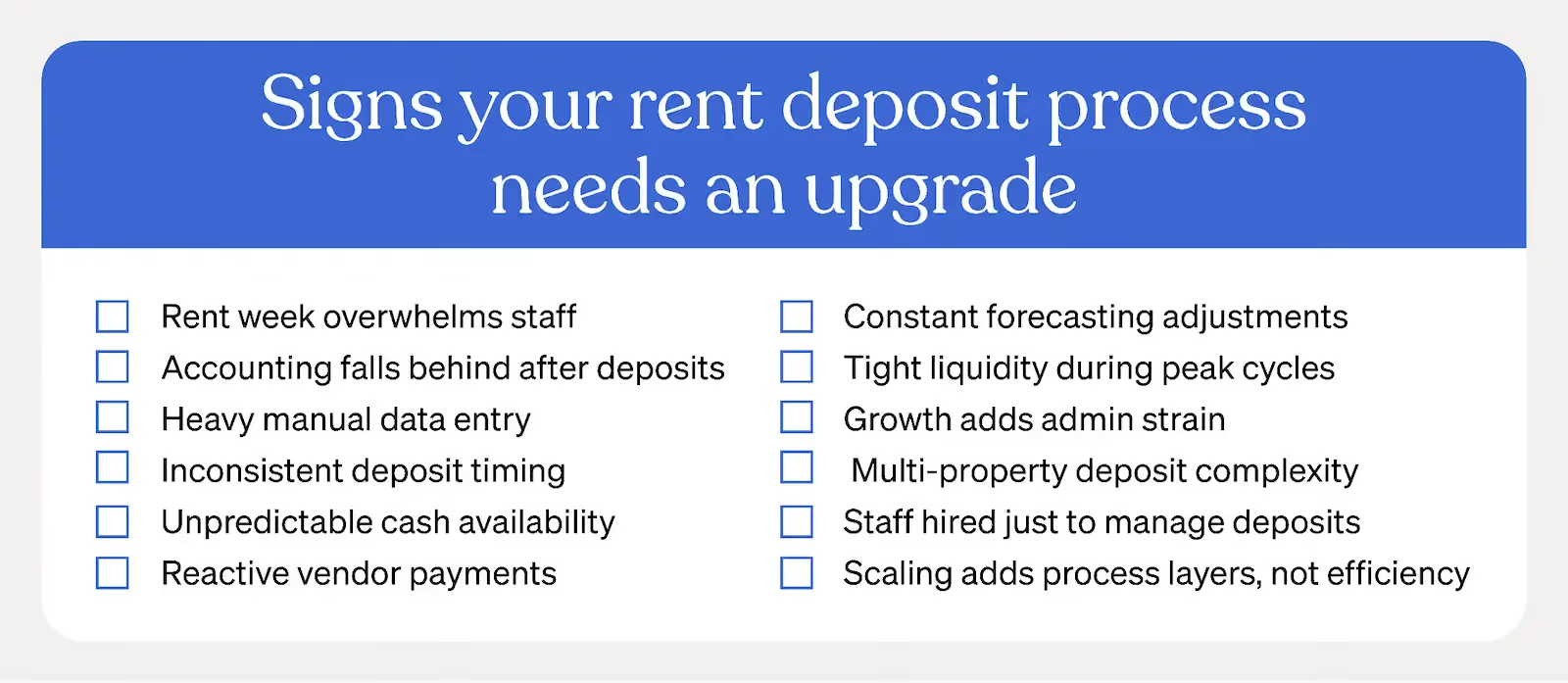
If any of the following challenges sound familiar, your current deposit workflow may be limiting efficiency, liquidity, or long-term growth.
Modernizing rent deposits can help streamline operations, improve financial visibility, and reduce risk of rent check fraud. Property managers can also explore Stable’s case studies to see how organizations are modernizing rent deposit workflows.
FAQs
Is electronic check deposit secure?
Yes. Electronic check deposit platforms use encryption, authentication controls, and secure banking integrations to protect financial data and prevent unauthorized transactions.
How quickly are funds available using electronic check deposits?
Availability varies by bank and processing policies, but electronic deposits typically reduce the delay between receiving a check and having funds available compared to manual deposits.
Do electronic check deposits replace online rent payments?
No. Electronic check deposits complement online payment systems by modernizing how physical checks are processed, allowing property managers to handle all payment types efficiently.
Can electronic check deposits integrate with property management software?
Yes. Many electronic deposit platforms integrate with property management and accounting systems, allowing payment data to sync automatically for reconciliation and reporting.
Automate rent check deposits to strengthen cash flow
Automating rent check deposits gives property managers a faster, more reliable way to move payments into operating accounts. By replacing manual deposit workflows, organizations benefit from quicker processing, reduced administrative work, improved accuracy, and stronger overall cash flow management.
More importantly, automation transforms rent processing from a repetitive operational task into a strategic financial advantage. Property managers can scale their portfolios, maintain consistent liquidity, and reduce overhead without adding additional staff or process complexity.
If you’re ready to modernize your rent deposit workflow and improve financial performance, contact our sales team today to learn how Stable can help you get started.