Healthcare practices lose revenue every day waiting for paper checks to arrive, get sorted, and clear the bank. HIPAA-compliant electronic check deposits give practices a faster, safer way to process patient and insurance payments without creating compliance exposure. This guide covers how electronic check deposits work, why they matter for revenue cycle performance, and what to look for in a compliant solution.
Key Takeaways
- Paper check processing creates delays in healthcare revenue cycles, increasing days in accounts receivable and raising compliance risk.
- HIPAA-compliant electronic check deposits require encrypted image handling, secure bank integration, audit trails, and a signed Business Associate Agreement (BAA) with your vendor.
- Practices that switch to electronic check processing can see same-day or next-day deposit times compared to multi-day delays with manual mail handling.
- A virtual mailbox platform designed for healthcare centralizes check intake, reduces PHI exposure, and connects directly to your banking workflow.
How patients can slow down revenue cycles
Patient payments represent a significant portion of revenue for healthcare organizations. Several structural factors create friction at each step of the payment process.
The rise of patient financial responsibility
Post-insurance balances are increasing as high-deductible health plans become the norm. Patients now regularly owe hundreds or thousands of dollars out of pocket, and practices must collect those amounts directly rather than relying on a single payer. Fragmented payment channels make this harder. A practice may receive payments via mail, patient portal, phone, and in person simultaneously.
The hidden costs of paper checks
Paper checks introduce costs that are easy to overlook:
- Manual mail sorting: Staff must open, sort, and log each check individually.
- Delayed deposits: Checks that arrive on Friday or during holidays sit unprocessed.
- Human error: Misread amounts, misfiled remittance documents, and keying mistakes create reconciliation problems.
- Increased days in accounts receivable (A/R): Every day a check sits in a mailbox or on a desk is a day revenue does not appear in the practice's bank account.
Compliance risks in traditional mail handling
Compliance risks for traditional mail handling include:
- Paper checks often contain PHI: Names, addresses, account numbers, and service codes all qualify as protected health information (PHI) under HIPAA when they appear alongside payment information.
- Insecure mailrooms create exposure: Open mail trays, shared sorting areas, and unsecured storage give unauthorized individuals access to patient data.
- Regulatory implications under HIPAA: Mishandling PHI in any form can trigger audits, corrective action plans, and significant financial penalties. Learn more about related risks in our guide to HIPAA-compliant mailing.
What is HIPAA-compliant electronic check deposit?
HIPAA-compliant electronic check deposit is a process that allows healthcare organizations to receive, scan, and deposit paper checks through a secure digital workflow that satisfies HIPAA's privacy and security requirements. The core components of a compliant solution include:
- Secure mail intake: Physical checks are received and handled in controlled environments with limited access and documented chain of custody.
- Check scanning and digitization: High-resolution imaging captures the check face and any accompanying remittance documents.
- Encrypted image storage: Scanned images are stored with encryption at rest so PHI cannot be accessed by unauthorized parties.
- Secure bank integration: Encrypted transmissions send check images to the practice's bank using remote deposit capture (RDC) protocols.
- Audit trails: The system logs every action taken on a check from receipt through deposit.
How it differs from traditional lockbox services
Standard banking lockbox services were designed for general commercial use. Many do not handle PHI under a BAA, do not apply HIPAA-specific access controls, and do not maintain the audit documentation required for healthcare regulators.
A HIPAA-compliant electronic check deposit service adds healthcare-specific safeguards at each stage, like controlled access to PHI-bearing documents, signed BAAs that establish legal accountability, and compliance-grade logging that a standard bank lockbox cannot provide.
Role of virtual mailbox infrastructure
A virtual mailbox service built for healthcare extends these protections to the point of mail intake itself. Key capabilities include:
- Secure document intake: Mail is received and scanned in a secure facility.
- Controlled access: Role-based permissions determine who can view, download, or act on scanned documents.
- Digital workflows: Checks route automatically to the appropriate billing staff or deposit queue.

How electronic check deposits accelerate patient payments
Switching from paper-based check handling to electronic deposit creates gains across every stage of the revenue cycle:
1. Faster deposit times
Same-day or next-day processing replaces multi-day mail delays. Checks received in the morning can be deposited the same business day, eliminating the float time that paper checks routinely generate.
2. Reduced manual processing
Automated routing eliminates the need for staff to sort, log, and physically transport checks to a bank branch. The system handles check identification and routing based on predefined rules and can be configured to automatically deposit a check the moment it is scanned.
3. Improved cash flow visibility
Real-time reporting gives practice managers an accurate view of pending deposits and cleared funds at any moment. This visibility can also integrate with revenue cycle management (RCM) systems to eliminate the lag between payment receipt and financial reconciliation.
4. Fewer days in accounts receivable
Days in A/R is one of the most closely watched metrics in healthcare revenue cycle performance. Electronic deposit compresses the timeline between service delivery and payment posting, lowering A/R days and improving the practice's financial position.
Ensuring HIPAA compliance in payment processing
HIPAA compliance in payment processing requires understanding exactly what PHI exists in the organization’s payment workflows and what safeguards every system component must provide.
How checks contain protected health information (PHI)
Common PHI elements found on patient and insurance checks include:
- Names of patients and account holders
- Account numbers that link to patient financial records
- Service references including claim numbers, procedure codes, or provider identifiers
- Addresses that tie individuals to specific healthcare relationships
Required safeguards under HIPAA
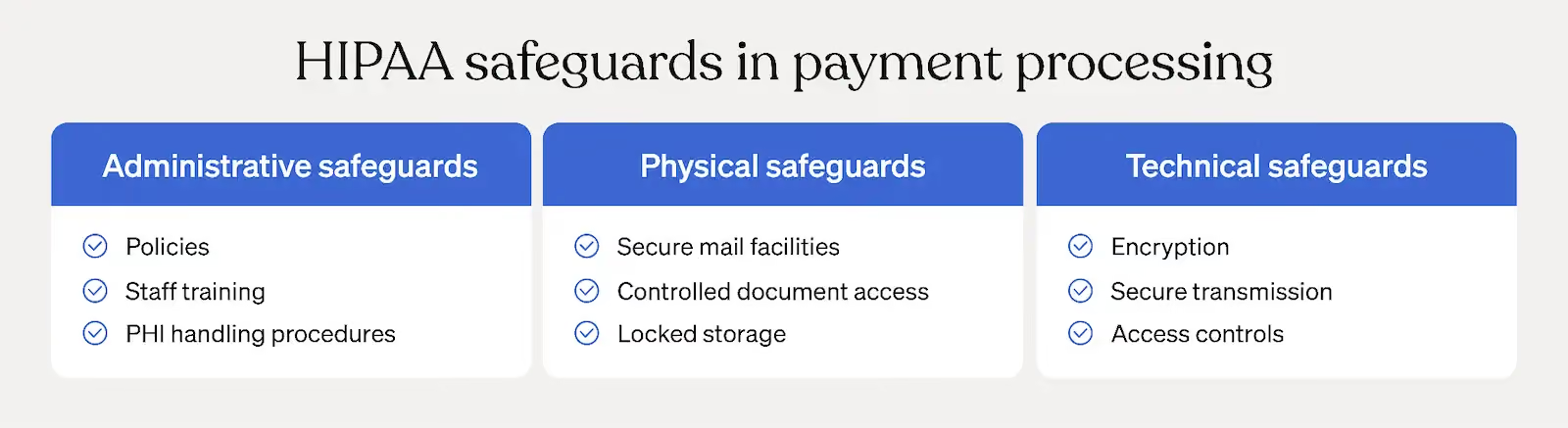
The HIPAA Security Rule establishes three categories of safeguards that covered entities and their business associates must implement:
- Administrative safeguards: Policies and procedures governing how staff handle PHI.
- Physical safeguards: Controls on the physical environments where PHI is stored or processed.
- Technical safeguards: Technology-based controls such as encryption, automatic logoff, and transmission security that protect PHI in electronic form.
Key security features to look for
When evaluating a HIPAA-compliant payment processing solution, confirm the platform provides each of these features:
- Encryption at rest and in transit: Check images and associated PHI must be encrypted both when stored and when transmitted to the bank.
- Access controls: Role-based permissions should limit which users can view or act on specific documents.
- Audit logging: Every action on a check from receipt to deposit must be recorded with timestamps and user identifiers.
- Business Associate Agreements (BAAs): Any vendor that handles PHI must sign a BAA before processing begins.
- Secure destruction policies: Original paper checks must be destroyed in a documented, secure manner after digitization.

ROI of electronic check deposits in healthcare
Electronic check deposits deliver returns across four areas that matter for financial health.
1. Reduced labor costs
Automating steps through electronic deposit reduces the labor hours dedicated to payment handling, allowing billing teams to redirect their capacity toward higher-value activities like claim follow-up and denial management.
2. Lower error rates
Human error in check processing creates reconciliation problems that take significant time to resolve. Electronic check systems capture accurate images, apply automated data extraction, and flag discrepancies before they reach the bank.
3. Faster revenue realization
Paper checks extend the gap between service delivery and revenue recognition. Electronic processing closes that gap, accelerating cash flow and allowing practices to meet payroll, vendor obligations, and capital expenses with greater predictability. These outcomes are reflected across our case studies from healthcare practices.
4. Decreased compliance risk
Using a compliant electronic check solution that includes a signed BAA, encrypted processing, and documented audit trails reduces the likelihood of a compliance incident and demonstrates due diligence if regulators investigate.
Accelerate patient payments without compromising compliance
Healthcare practices cannot afford to choose between speed and compliance. The right electronic check deposit solution delivers faster deposit times that improve cash flow and reinforce a compliance framework that protects patient data at every step.
Stable for healthcare gives organizations a HIPAA-ready platform that handles secure mail intake, check scanning, encrypted deposit, and audit logging in a single workflow designed specifically for medical and clinical environments.
Ready to reduce A/R days and eliminate paper check risk? Get started today or contact our sales team to see how Stable fits your practice.
Frequently asked questions
Is remote check deposit HIPAA-compliant?
Remote check deposit can be HIPAA-compliant, but only if the vendor handles checks under a signed BAA and applies appropriate technical and physical safeguards.
Standard consumer or business mobile banking apps often do not meet these requirements because they are not designed to handle PHI and do not offer BAAs to healthcare providers.
Is a bank lockbox HIPAA-compliant?
Most standard bank lockbox services are not HIPAA-compliant for healthcare payments. Traditional lockboxes are built for commercial remittance processing and do not provide the access controls, encryption standards, or BAA coverage required under HIPAA.
How quickly can checks be deposited electronically?
Checks received during business hours can typically be deposited the same day or the following business day with a HIPAA-compliant electronic check deposit service. Exact timing depends on your vendor's processing cutoff times and your bank's RDC deposit deadlines.